 National Aeronautics and Space Administration
Science
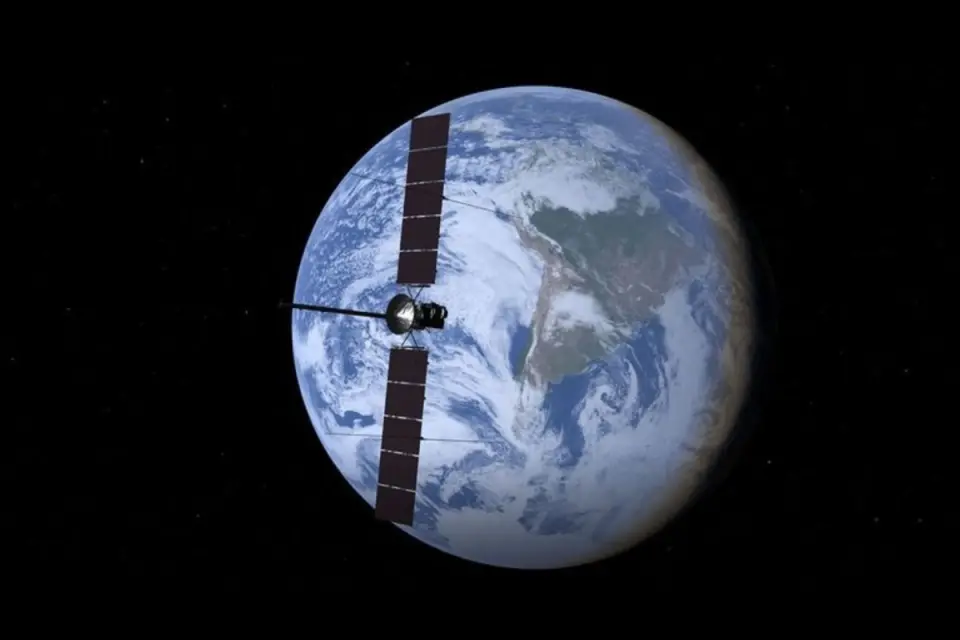
NASA's Europa Clipper zooming by Earth on way to Jupiter's icy moon
5 outlets3 countrieslatest


Saturday, November 28, 2026
Saturday, November 28, 2026
Saturday, November 28, 2026
Science
Spectrum of the outlets2 rated
2 rated outlets by their audience-sharing estimate; 8 more without one
The latest headline of each rated outlet, by side.
Left-leaning1 outlets
Center0 outlets
No center outlet has covered this story. That absence is part of the picture.
Right-leaning1 outlets
One entry per outlet; its other reports fold under it. 10 reports from 10 outlets.
Other stories of the last two weeks on the same subjects, closest first.
Science
5 outlets3 countrieslatest
Science · Technology
4 outletslatest


Science
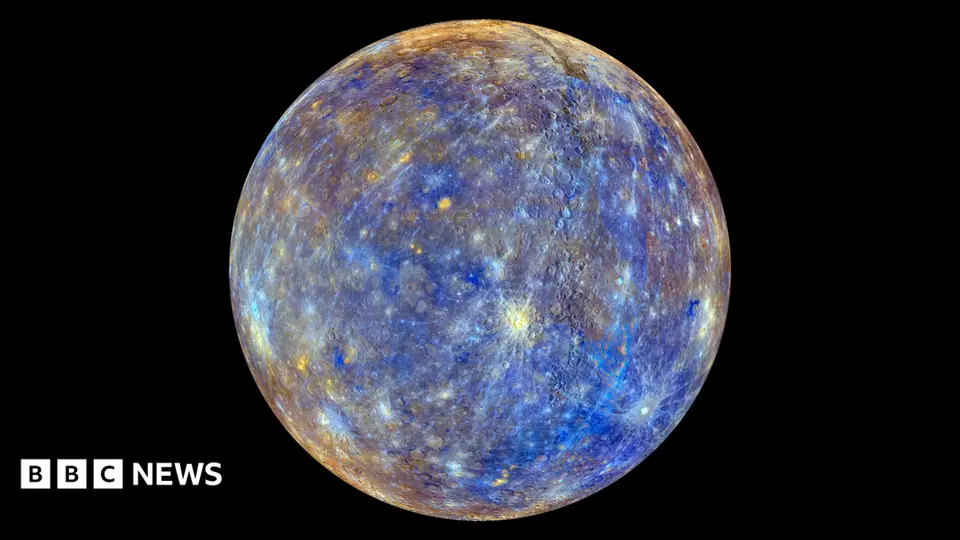
The BepiColombo mission, a joint project of the European Space Agency (ESA) and the Japan Aerospace Exploration Agency (JAXA), entered orbit around Mercury on November 21 after an eight-year journey from Earth.
Science
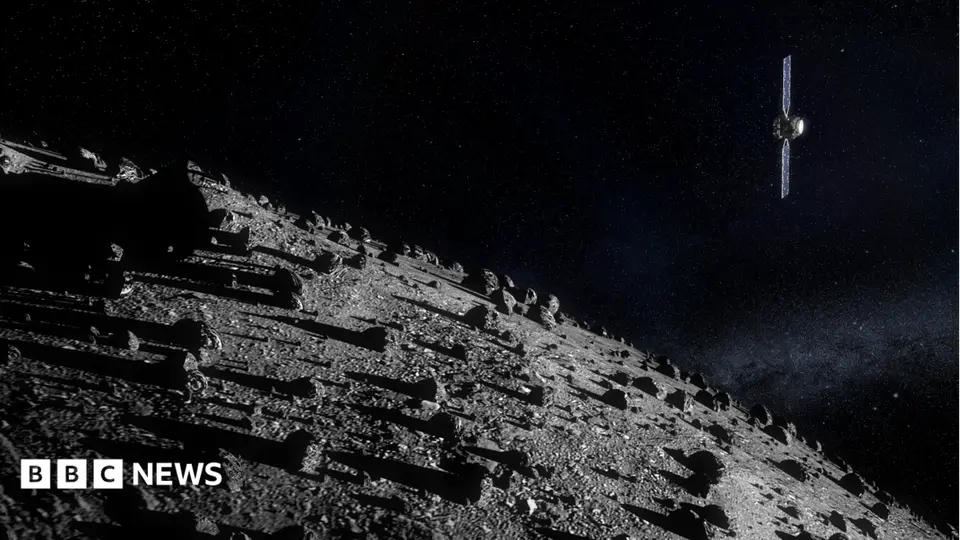
Images from the European Space Agency's Hera spacecraft have revealed a stadium-sized crater on Dimorphos, an asteroid that NASA's DART probe deliberately struck in 2022 to test planetary defense.
Ownership: Wikidata (CC0). Feed list partly from Kagi News (MIT). Spectrum estimates: Berkman Klein Center (CC BY 3.0); each country's own spectrum: Reuters Institute Digital News Report 2022 (CC BY 4.0). State and public media: State Media Monitor, MJRC (CC BY 4.0). Overviews are written by AI and checked by a second model; sections are set by AI.
© 2026 STORESWIKI LLC
Order:Latest reports firstIn the order outlets first reportedFrom left to rightA to ZOwn reporting first
Voyager 1 was launched on September 5, 1977

 HackadayUnrated
Recently NASA confirmed that the Voyager 1 spacecraft is now one light-day from Earth, taking more than 49 years to reach this point since its launch in 1977. Marring this memorable occasion is the di...
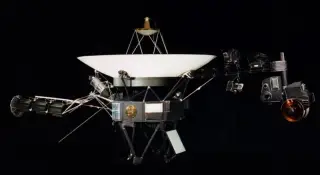
Voyager 1 tarihi dönüm noktasına ulaşırken yeniden iletişim arızası yaşadı
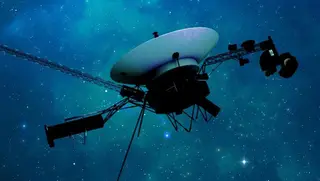
Just as NASA’s Voyager 1 was about to become the first human-made object to travel a light-day from Earth, the probe had yet another communication breakdown.

America’s legendary space probe has officially gone farther than anything humans have ever built: one full light-day from home.NASA’s Voyager 1 crossed the mark at 5:16 a.m. Eastern on November 18, putting it about 16.1 billion miles from…
NASA’s Voyager 1 has made history after 49 years in space, reaching an astonishing 16.1 billion miles from Earth, where even light takes 24 hours to bring its signals home.
In English: Voyager 1 pushes back the boundaries of the solar system (AI translation from French)
La sonde spatiale Voyager 1 se trouve désormais à une journée-lumière de la Terre. Lancée en 1977 pour explorer Saturne et Jupiter, elle continue aujourd’hui à repousser les limites du système solaire. Au sens propre.
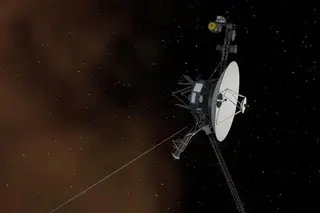
Nearly 50 years after its 1977 launch, NASA’s Voyager 1 spacecraft has become the first man-made object to reach a milestone distance of one light-day — roughly 26 billion kilometres — from Earth.
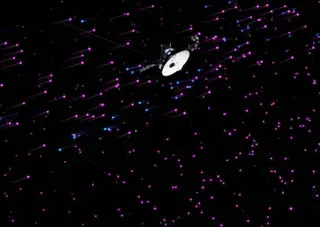
Voyager 1 hit one light day from Earth while its data was cut off. NASA's team expects engineers will be able to fix the problem. Will they?
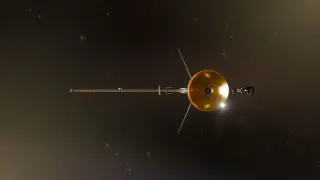
This week a bright supermoon graces our chilly November skies and Mars meets up with the brightest star in the constellation of Leo. History was made several days ago as Voyager 1 reached the landmark distance of being exactly one…

Public Bluesky posts that link to these reports, counted once per account and report. Bluesky's users are not a cross-section of the public: this shows what is shared there. How we count
6posts from 6 accounts in the last 14 days
Who controls each outlet at the top of its chain of owners in Wikidata (CC0). Shareholders without a majority do not count.
How the State Media Monitor (2026, CC BY 4.0) classifies the state and public media covering this story: who funds and governs them, and who steers what they report. More
Measured on the reports of the last 30 days of the 10 outlets here with at least 20 reports. Working habits, not verdicts: a correction note is good practice, and a wire copy can be accurate.
Reports they wrote themselves99%
Median share of each outlet’s reports that are not wire copies or near-copies of another report.
Headlines changed after publication6%
Median share of each outlet’s re-read reports whose headline changed later.
Pages removed after publication0%
Median share of each outlet’s re-read reports that were gone when read again.
Outlets with a correction note25%
Share of outlets that added a correction or editor’s note to at least one report.
Outlets that broke a story90%
Share of outlets that were first to report at least one story with three or more outlets.
Medians across outlets, so one big outlet does not stand for the rest; a side needs 3 outlets with the data (— when it has fewer). Each outlet's own numbers are on its source page. How we measure
How the 10 outlets here with data make money, from their own pages of the last 30 days and their ads.txt files. It says how, not how much.
Sell advertising90%
Outlets whose ads.txt file names companies allowed to sell their ad space, or whose pages carry ad code on at least a fifth of the pages read. Out of 10 outlets with the data.
Paywall or meter—
Outlets whose reports say they are behind a paywall or meter on at least a fifth of the reports read. Out of 1 outlet with the data.
Ask readers to give or join10%
Outlets asking for donations, contributions or memberships on at least a fifth of their pages. Out of 10 outlets with the data.
Sponsored-link boxes40%
“Around the web” boxes of paid links (Taboola, Outbrain and the like) on at least a fifth of their pages. Out of 10 outlets with the data.
Links marked as paid20%
Links the outlet marks as paid placements (rel="sponsored": casinos, partners, advertisers) on at least a fifth of their pages. Out of 10 outlets with the data.
Commission links10%
Shopping links that pay the outlet a commission (Amazon Associates, Skimlinks and the like) on at least one page in twenty. Out of 10 outlets with the data.
State or public media20%
Outlets the State Media Monitor counts as state or public media: funded or controlled by a state, or both. Out of 10 outlets with the data.
Shares of the outlets with the data; a side needs 3 (— when it has fewer). Each outlet’s details are on its source page, and the coverage list can leave out outlets that sell advertising. How we read this
Reports per 6 hours, by side, from the first report on.
first report153 h later
Outlets by the country they are based in, 7 in all.
Outlets placed by how their audience leans compared with the people of their own country, so a UK outlet is measured against UK politics, not American. The data
United States3 outlets · Berkman Klein Center, 2019
United Kingdom1 outlet · Reuters Institute, 2022
No audience research with a licence we can use yet for Canada (1), Cyprus (1), Russia (1), South Africa (1).
Headlines from outlets based outside United States, where most of the coverage comes from: one per outlet, in English where they were in another language (AI translation).
United Kingdom1 outlet
South Africa1 outlet
Canada1 outlet
Cyprus1 outlet
Russia1 outlet
1 report was edited without a headline change or note. Every change on this story


 TASS
 Haber Kıbrıs
 La Presse
 IOL
 Mashable
 South Wales Argus